
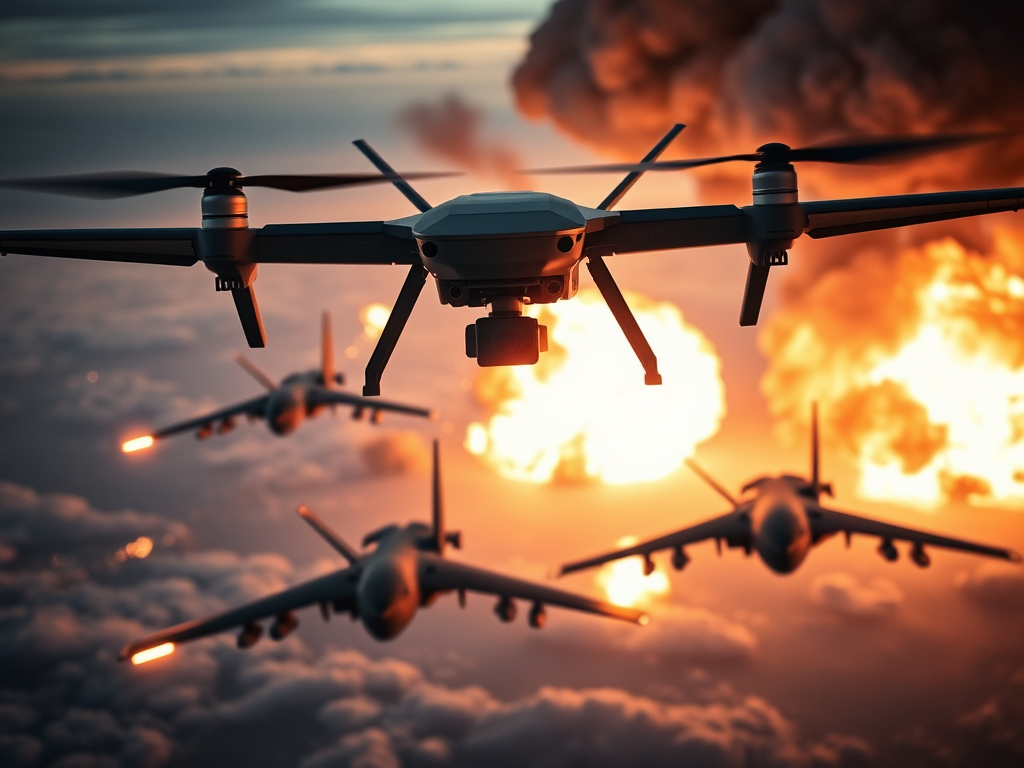
In the grand theatre of military history, surprise attacks powerful enough to cripple an empire have often been depicted as “watershed” moments. These attacks often reshape any nation’s policies, strategies as well as narratives. On December 7, 1941, the attack on the Pearl Harbor was one such incident. This was the day that would go down in the history of Mankind. Fast forward to June 1, 2025, the military might of the Russian Federation was challenged on its own soil. This incident shocked the entire world and the military watchers worldwide. This was Russia’s Pearl Harbor moment by the Armed Forces of Ukraine with its operation Spider’s Web

Agenda behind the Daring operation against a Nuclear Superpower?
Yes, Russia is undoubtedly a nuclear superpower and has been for the more than half a century. It possesses one of the most advanced nuclear arsenals in the world, including the largest stockpile of such weapons. Although nuclear weapons have not been used in the ongoing war, other powerful and deadly systems have been deployed. Missiles like Kh-22, Iskandar-K, Zircon and Kinzhal hypersonic missiles have repeatedly been used in the war, many from the air platforms. To stop these platforms from taking off and targeting Ukraine’s infrastructure, the Ukraine intelligence devised a plan to subdue these air platforms.
Planning and Execution
This attack had been planned by Ukraine for over a year involving smuggling small, portable and cheap drones. According to Dr. Steve Wright, these drones were simple quadcopters, each capable of carrying heavy payload. A relatively small fleet of 117 of these drones were cleverly transported in trucks concealed within wooden boxes. Their target? Russia’s strategic air assets.
Russian military bases with long range nuclear capable bombers. The coordinated strikes targeted the long-range aviation assets at five air bases— Belaya, Ivanvo, Olenya, Ukrainka, Dyagilevo deep inside the Russian territory. The assets included nuclear capable long-range bombers such as Tu-22M3, Tu-95, Tu-160 along with A-50 Airborne Early Warning and Control Aircraft and fighter jets such as Su-34s and MiG-31s.

As per Ukraine, 41 assets have been destroyed or damaged. This is a strategic defeat to Russia as there are no active production lines for maintenance of these aircrafts. Despite its sophisticated Air Defense System, Russia failed to detect any such attack in time. This was a major failure for the Russian Federal Security Service (FSB). Analysts credit this to the Ukraine’s secret planning and tactics as the Russians could not figure out before it was too late. There is also another factor that these drones were launched internally rather than crossing the border.
Damage analysis
Reports suggest that around 34% of the long-range bombers has been incapacitated. The losses, estimated to be around $7B is huge for Russia’s strategic air fleet. This is a major psychological and strategic setback for Putin’s Russia.
Strategic Impact
This operation has provided Ukraine a fighting ground deep inside Russian territory. It has proved that it is capable of penetrating deep into Russia’s territory, forcing Moscow to rethink its strategies. The fact that Ukraine’s drones bypassed Russian Air Defense System has shaken the military confidence, raising concerns about future vulnerabilities. The loss of these bombers means that Russia’s ability to strike Ukraine’s infrastructure is severely weakened.
Russia’s response?
Russia wasted no time retaliating with missile & drone strikes across the Ukraine’s major cities targeting their military command and power grids. President Vladimir Putin condemned this attack calling it a direct assault on Russian sovereignty. He vowed to intensify the ongoing military operation and strengthen internal air defenses.
Russian Sentiment
The public is divided. There are some, who have been criticizing the military and intelligence failure in detecting the incoming drones. While others demand stronger retaliation including the use of nuclear weapons calling it “Russia’s Pearl Harbor moment”. This could lead to an internal unrest among their military leadership which would be ill suited given the current circumstances.
Conclusion
Operation Spider’s Web has redefined the Russia-Ukraine conflict by introducing a new era of modern, tech-driven warfare. It has proven that a modern relatively small cheap intelligent fleet can blow severe damage to any powerful strategic fleet. By deploying these cost-effective drone fleet, Ukraine has demonstrated that sheer numbers and brute are no longer the only determinants of any battle. This signals arrival of new era where modern warfare is increasingly reshaping the modern warfare. The future of combat will not be dictated by just firepower but by intelligence and innovation as well.
Is China a superpower? click here to read



Leave a Reply