
Donald John Trump, the 47th President of U.S.A is a complex man. His political journey has been marked by many bold decisions, unconventional strategies and a relentless drive to reshape America’s role on global stage. He came into the power for the second term in January 2025 on his “Make America Great Again” drive. He became a leader who thrives in controversies and yet commands attention across the globe. Whether through his move to tariff entire world, adversaries and allies alike or through his legacy building experiments in power. He is a paradox who is loved by his supporters for his unapologetic style and criticized by opponents for his unpredictability. The latest addition to that is the idea of “Core-5 or C-5 group.

What is Core-5 or C-5?
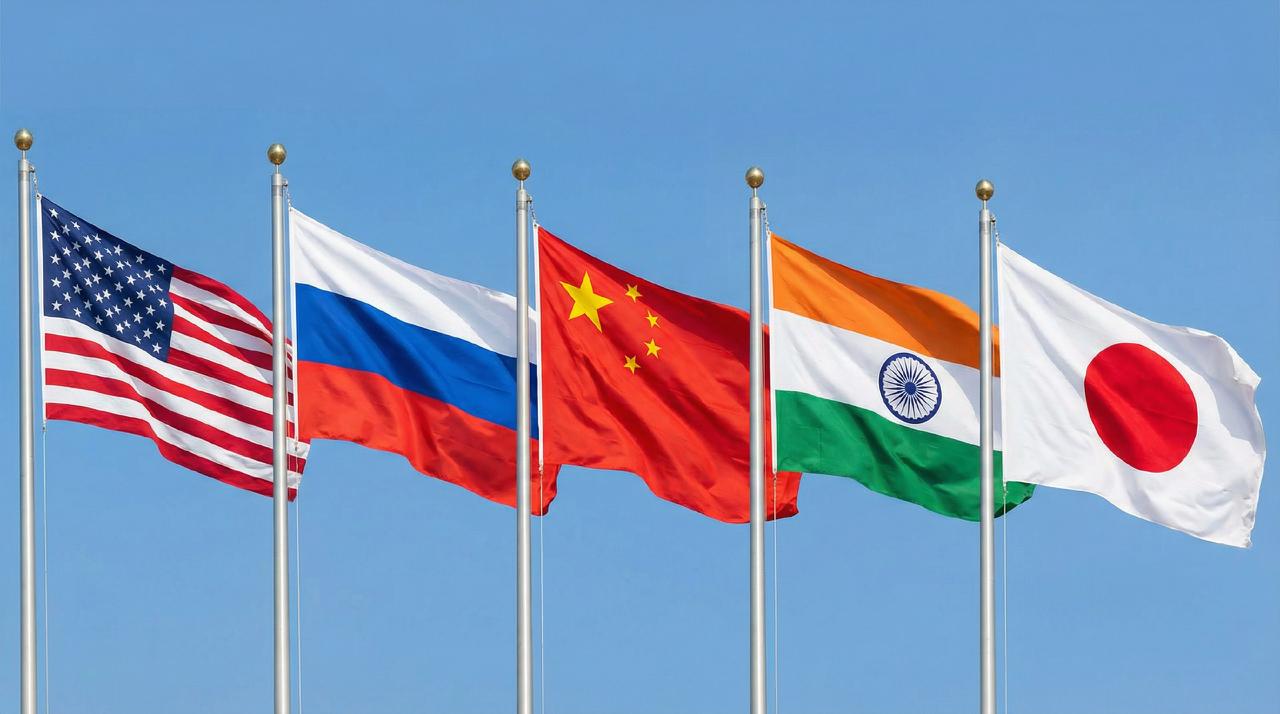
This is a concept that was initially included in one of the many drafts of the National Security Strategy 2025. This is a proposed elite group of five major powers – United States, Russia, China India and Japan. These are not just the top five most influential states; they also each command a population of more than 100 million. This group sidelines Europe entirely, with traditional allies such as the UK, France, and Germany bypassed completely. The idea of a Core-5 or C-5 group — uniting the US, China, Russia, India, and Japan — has sparked debate about whether it’s a bold legacy move or just a geopolitical myth.
What is the end goal?
Mr. Trump has been a critic of North Atlantic Treaty Organization & of the G7 formerly known as G8. He believes that Europe is losing its dominance with the emergence of an equally powerful BRICS, if not more. His push is to re-center the global influence around the major global powers outside of the European countries, especially in Asia. This is a signal for the direct engagement amongst the heavy weights bypassing the institutions that dilute the US leverage.
This is also an opportunity to directly engage with the Asian giants at the same table rather than relying on European partners. With the emergence of BRICS and discussions about a new currency, the US dollar may begin to decline. Trump would not want America to be left isolated when that happens. His approach often favors deal making with strong nations rather than maintaining costly commitments that is not in America’s interest.
Implications
If this happens, then the G7, dominated by the western nations will lose its relevance. This will eventually lead to weakening of NATO and sidelining of G7 on the global stage. Trump’s idea also reflects the reality of a world order with limited to low European influence. A global order where Asia and BRICS especially RIC are more important and influential players than the West. If institutionalized, this would mark a radical reordering of global governance, potentially remembered as Trump’s attempt to rewrite the rules of international politics. This would also mark a shift towards a more multipolar world with distributed among several countries. The risk of major conflicts or wars would decrease drastically with a dramatic shift in nuclear deterrence.
What are the challenges?
If we look at Asia, we can find bilateral frictions between these nations. India–China tensions remain unresolved since the 2020 Galwan Valley clashes. Japan-China relations have entered a dangerous phase over Taiwan where one wrong move can lead to a small-scale military clash. Tensions between US and Russia are at their peak since the Cold war, as is Russia-Japan dispute.
The group lacks any common ground, values or agenda to succeed unlike G7 or NATO. By excluding EU countries, this bloc risks isolating the United States and inadvertently strengthening the position of powerful adversaries such as Russia and China.


Leave a Reply